Comic-Con 2026: Marvel Came Back, the Building Nearly Broke
- gream
- Jul 27
- 3 min read
SAN DIEGO — San Diego Comic-Con 2026 ran July 23 to 26, with Preview Night on the 22nd, and it will be remembered for two things that sit awkwardly together: it was the strongest edition in years, and it was the one where the organizers publicly floated dismantling their own main stage.
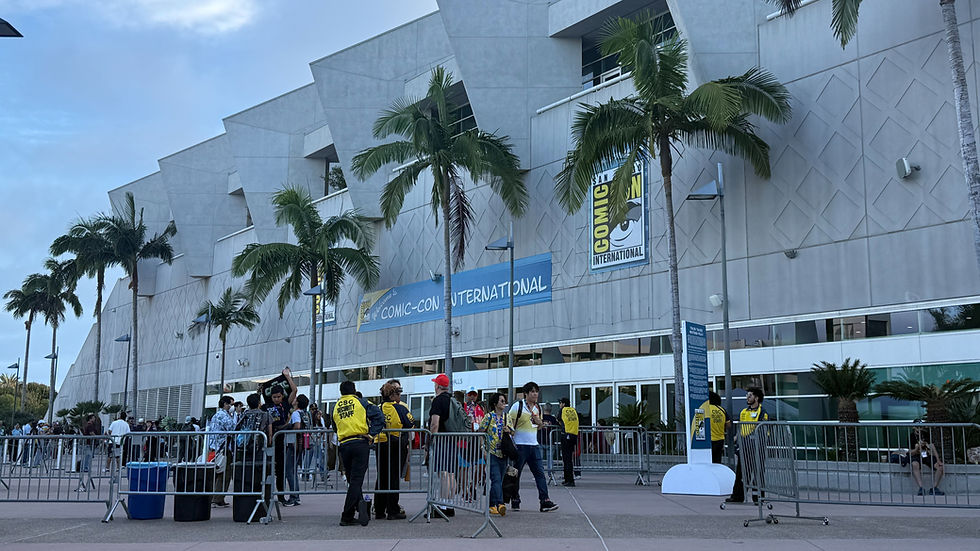
Start with the good, because there was a great deal of it.
Marvel Studios returned to Hall H after skipping 2025 entirely, and treated the Saturday night slot accordingly. Kevin Feige put nearly two dozen "Avengers: Doomsday" cast members on stage alongside directors Anthony and Joe Russo, then showed roughly two minutes of exclusive footage — Robert Downey Jr.'s Doctor Doom on a throne, narrated by Vanessa Kirby's Sue Storm as something closer to a eulogy than a threat, ending with Sentinels rising from the ground. The film opens December 18.
Then came the announcements that will outlive the weekend. Ryan Gosling was revealed as Ghost Rider, with Shawn Levy directing for 2028 — a casting fans had campaigned for openly since 2022, delivered with a staged assist from journalist Josh Horowitz in the crowd. And Ryan Coogler closed the panel by confirming a third "Black Panther" for December 15, 2028, shot on large-format film, introducing David Jonsson as the grown son of Chadwick Boseman's T'Challa. Six years after Boseman's death, Wakanda has a successor.
Elsewhere, Apple TV made its first Hall H appearance. "Star Trek: Strange New Worlds" brought its fourth season and the franchise's 60th anniversary. Ballroom 20 opened Saturday with an animation block spanning "The Simpsons," "Futurama," "Bob's Burgers," "Family Guy" and "American Dad."
On the comics side, the Eisner Awards produced a genuine first: Sanho's "Purgatory Funeral Cakes," published in English by Dark Horse and translated by Danny Lim, won Best U.S. Edition of International Material—Asia — the first Korean win in the awards' 38-year history. Hours earlier, the Eisner Hall of Fame inducted 23 people including Akira Toriyama, posthumously, and Go Nagai.
And the exhibit hall had a strong commercial year. Exhibitors reported brisk sales across collectibles, toys, art and exclusives, with Preview Night crowds as dense as veterans could recall.
Now the strain.
The Eisner winners leaked nearly two days early, posted in error on Comic-Con's own website, spotted and reposted to Reddit, and confirmed accurate when the ceremony finally ran on Friday. The organization has said only that it is investigating.
More seriously, the Hall H entry system failed. With Marvel headlining, the wristband and line-placeholder apparatus collapsed under a mix of attendees working the rules and staff unclear on what the rules were. More than 600 people who had queued for as long as 30 hours were held short of the doors and eventually turned away.
At Sunday's talkback panel, they came to the microphone one after another. Asked why New York Comic Con manages this with RFID badges and San Diego does not, organizers explained that RFID requires outdoor wireless coverage nobody has funded — and made an open appeal from the stage for a sponsor. Then chief communication and strategy officer David Glanzer went considerably further, noting that Comic-Con outgrew the convention center in 2010, that Hall H exists only because it was converted from revenue-generating floor space, and that the organization may need to consider reversing that decision.
Read as strategy rather than a slip, that is a message to City Hall. Comic-Con re-signed to stay in San Diego through 2030 just before this year's show, and confirmed that 2028's dates will shift for the Los Angeles Olympics. But what San Diego gets in those years is apparently negotiable.
The economics behind it were visible all week. The lawn between the Hilton Bayfront and Hall H — normally packed with studio walkthroughs — sat empty. Hollywood's consolidation, layoffs, softening streaming revenue and reduced marketing budgets removed much of the offsite spend that Comic-Con relies on to absorb crowds it cannot physically hold. Sponsorship signage revenue was down, which is precisely the money that would fund the fixes.
One decision made months earlier landed better. In January, after artists including Karla Ortiz objected publicly, Comic-Con reversed a quiet policy permitting labeled AI-generated work in its Art Show and imposed a full ban. The 2026 show was the first held under the new rule.
So: a convention that delivered a Ghost Rider, a Black Panther, a Doctor Doom, a Korean Eisner and a healthy sales floor, while simultaneously proving it cannot reliably seat the people who wait 30 hours for the privilege.
Both things are true. Which one defines 2027 depends largely on whether anyone writes a check.


Comments